Article by architects Francesco Prina and Marisa Stradi,
As Braudel says: “Cities, immobile points on the map, feed on movement”... and in turn, organise and produce it. The cities, located along the shores of the Mediterranean Sea, are characterised by a rich history, culture and architecture. Their urban development has been characterised by a close physical and structural relationship with the sea, which has strongly conditioned their shape and urban morphology. The history and culture that developed around the Mediterranean Sea takes us back to admire splendid cities for their architectural beauty, the original and unique urban form, reflecting the influence of the different civilisations that have left their mark on the coastal territories and the hinterland over the centuries. Mediterranean cities, characterised by a mild climate, have a delicious cuisine and a wide variety of natural landscapes and urban archaeology that make them popular tourist destinations.
Climate Change
Since the Second World War, with an acceleration in the last 30 years, the phenomenon of the fast climate change with the sudden rise in temperatures, has created new problems for coastal cities. The global phenomenon called “Sea Level Rise” is mainly caused by rising temperatures, calculated at 1.5°centigrade within this century. As established by the’2015 Paris COP agreement, the rise in sea water levels is estimated between 26 and 77 centimetres by 2100 (figure from the Intergovernmental Panel on Climate Change PCC Special Report). The thermal expansion of water, the melting of Arctic and Antarctic ice are the main effects of this phenomenon, which become the causes of coastal erosion, the flooding of wetlands, the contamination of aquifers, and the inundation of parts of coastal cities, rendering them uninhabitable. These effects alter marine biodiversity affecting the fishing and maritime activities of the coastal populations.
The new scenarios
Nature, condiated by human activity, and maritime culture, intimately interdependent, indicate the awareness of an ecological balance to be re-actualised even in the creation of the human artifice par excellence: the city. Coastal towns were historically a refuge from the dangers of nature and/or the wickedness of man, will become equipped urban structures for a sustainable, increasingly resilient and smart future. People connected to the sea have developed a set of activities, knowledge and techniques that qualified artistic content, innovative policies, architecture and urban forms characterised by port areas that have become real mediations between land and sea, sites of exchange, cultural and commercial. Today, these are places of residential, tourist and leisure vitality, examples of excellent urban regeneration and redevelopment. In the new global scenario of rising sea levels, Mediterranean cities, charged with their own seafaring culture, they will have the opportunity for a new adaptation, which requires the investment of new technologies. Venice with the Mose installation is already a first example, and each coastal city will have its own way of adapting to rising sea levels. The new climatic conditions force us to apply “0” impact technologies with renewable energy and within a circular economy. The challenges of the future are already challenging us today, must be handled without fear and without catastrophic omens. They must be approached with the knowledge that Mediterranean cities have their own history and resilience, will still be able to adapt and development for a prosperous and peaceful future for generations to come.
“Every city contains within itself a vocation and a mystery: each is in time a distant image of the eternal city. Love it therefore as you love the common home destined for you and your children” (Giorgio La Pira)
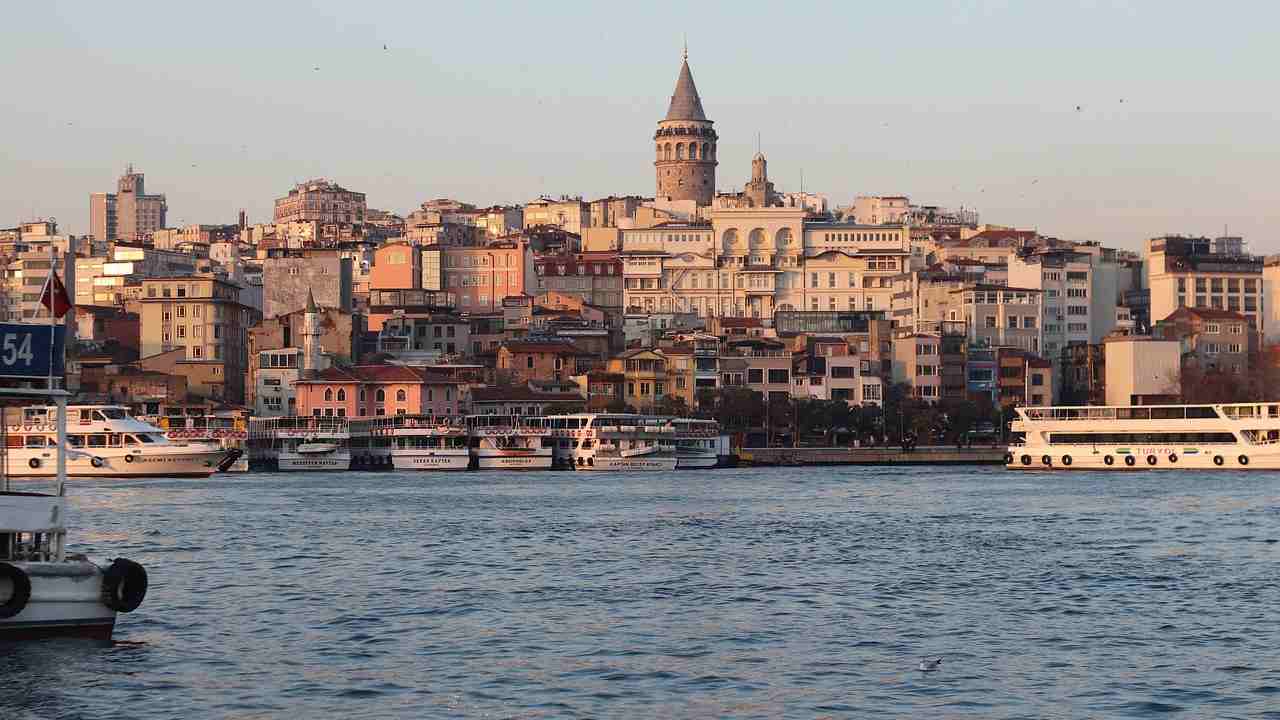
Cover image: Galata, Istanbul (@ Şinasi Müldür from Pixabay)