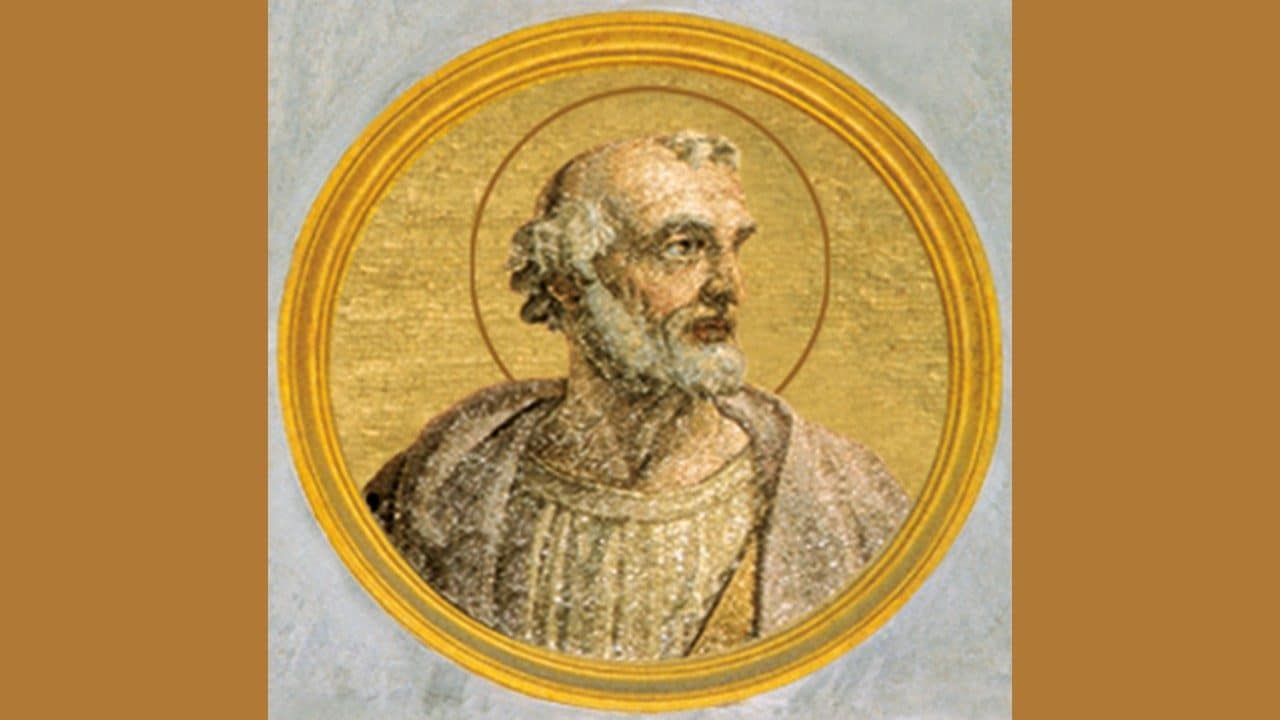
1980s, I was sitting at a primary school desk. Today I've discovered that the 80s are being brought back by the teenage fashion trend. I have so many memories recorded in my mind from that period: definitely the holiday beach, but also those hateful and useless school pinnies, Michel Platini and Maradona's Napoli, Michael Jackson concert posters, Giulio Andreotti, the Berlin Wall and the Fiat Tipo. I remember a lot, much more besides. Anyway, today that day flashed into my mind when the teacher told us the story of Pope Leo the Great. Ever since then, I've remembered that story, fascinated by the heroism, but above all by the personality of that extraordinary Pontiff. 10th November is Saint Leo the Great. I don't understand why we don't celebrate him as a national hero, perhaps precisely because we do even more, we honour him as a Saint. After him only one other Pope was given the epithet the Great, namely Gregory. Two other laymen had that honour: Alexander the Macedonian and Charles from across the Alps. Why does Leo the Great deserve more attention in our schools and in our culture? I'll try to remember him in the simplicity of my tale. Attila, King of the Huns, the Scourge of God, wherever he passed not a blade of grass grew, decided to