
For some time, scholars, interpreting data on ongoing climate change, have been predicting a widespread equatorial scenario, characterised by long periods of drought alternating with phases of intense rainfall.
This representation encourages international scientific research to identify corrective measures - both behavioural and technical - through public and private instruments to counter climate change.
These behaviours and tools are part of a civic education that must be strengthened, including through concrete and motivating results.
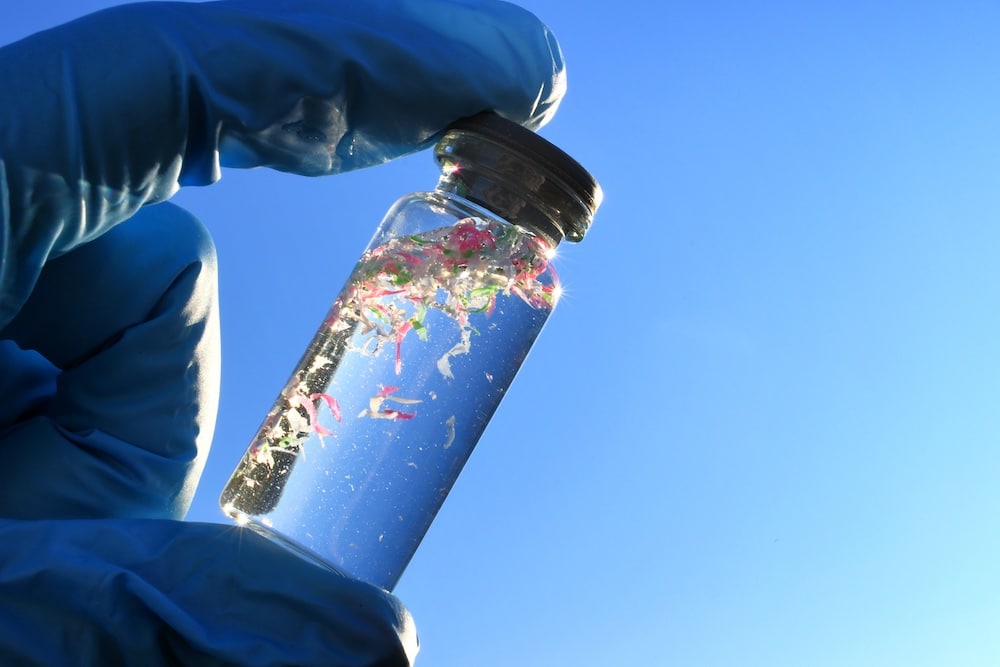
In the Principality of Monaco, a comparison of the most advanced models has been going on for years, aimed at their dissemination through conscious promotion. However, the water in the Principality remains contaminated with microplastics and also with particles from the abrasion of car tyres, and there is now a proven method to remove them down to a size of 0.01 microns. iranja
Among the most innovative players are the companies SAPEO OÜ and AQUALAB d.o.o., which have focused on water purification and the elimination of microplastics, as well as the possibility of reusing waste water - both in drinking and irrigation form.
Valuable work for environmental and economic sustainability, with results that are immediately evident.
They have developed a filtration module suitable for installation in urban drinking water and wastewater treatment plants, which enables the removal of microplastics from tap water down to a size of 0.01 microns and, in addition, the re-use of treated water for the irrigation of public green areas during periods of drought, as this water does not contain microplastics. In this way, water from the sewage system will not pollute the sea with microplastics, which will also benefit the Port of Monaco.
Thanks to the latest membrane technology, water can be purified down to a level that prevents the passage of microfibres and contaminants down to 0.01 microns.
The first level to act on is the water distribution system, whether at city or national level.
The second level is any urban area with access to drinking water pipes: here, a Hyper filter can simply be installed to prevent the release of microplastics and contaminants.
The only effort required of each individual is the monthly replacement of the membrane, which takes only one minute.
Another system that allows water to be reused (e.g. for irrigating public spaces or agricultural areas) without the use of disinfectants is installed at the level of the sewage system, so existing systems can be upgraded.
The device is modular and adaptable to existing urban infrastructures.
After analysing water quality and more than 4,000 samples collected worldwide, the companies concluded that a circular strategy must first of all ensure the purity and safety of drinking water, as tyre debris was also found in the water, the presence of which must be absolutely avoided for the protection of human health.
The problem must therefore be addressed at all levels: national, city and individual.
The Hyper filter can also be used on holiday as it is easy to transport and allows anyone to drink microplastic-free water wherever they are by simply unscrewing the existing aerator and replacing it with the Hyper filter.
The research therefore focused on water purification, the elimination of microplastics and the treatment of urban waste water through a combination of the classical system and membrane technology with ozone.
This approach allows for the removal of residual pollutants that traditional systems cannot remove, ensuring maximum quality and reliability.
As a result, hybrid filtration devices were developed to remove microplastics from water systems, also equipped with ozone generators to purify wastewater by removing: microplastics, total coliform bacteria and E. coli, in cooperation with other partner companies.
All this in-depth work leads to immediate benefits: water purification, improvement of city water quality, upgrading of sewage systems, irrigation of green areas, rinsing of surfaces in treatment centres, street cleaning and irrigation of recreational areas.
The membrane is designed for large flow rates and has a negative charge, reducing the risk of organic contamination and the formation of microorganisms.
The system developed by AQUALAB d.o.o. represents a new approach that combines additional treatment with the use of ozone, both for water disinfection and automatic membrane cleaning.
The main objective of the research and development was to obtain microplastic-free water for each household and to reuse wastewater for irrigation from treated water from municipal biological plants (final discharge), avoiding the spread of microplastics into the sea.
As already mentioned, this was achieved by removing microplastics and harmful organisms such as coliform bacteria and E. coli.
The system used includes a membrane filter with ozonation capability.
The research conducted compared the effectiveness of filtration on both incoming raw sewage and treated water.
The results showed that the system is effective in removing suspended solids and microplastics in both cases.
Since the system does not remove biodegradable substances, the company focused on the water coming from the treatment plant in the later stages of research.
Again, the AQUAREG system removed suspended solids, microplastics down to 0.01 microns and microorganisms such as coliform bacteria and E. coli.
To identify microplastics, an in-house developed system was used, based on special filtration and micrographic analysis of the sample.
Removal efficiency was also studied using FT-IR spectroscopy.
The results showed that the AQUAREG system removed 88% of coliform bacteria and 93% of E. coli bacteria.
After an additional ozonation step of the filtered water, a total removal (100%) of both coliform bacteria and E. coli was achieved.
In both cases, all residual microplastics were completely eliminated within the treatment plant.
This work proves functional immediately and is ready for installation in all water distribution and treatment plants.
Nicola Tavoletta