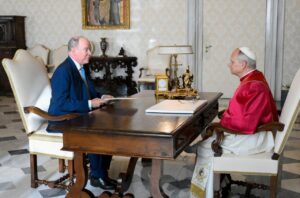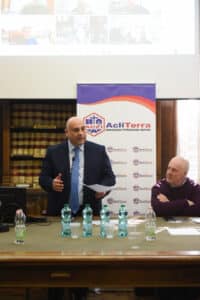

Acli Terra and AGCI (General Association of Italian Cooperatives) were received today in Geneva for a hearing with the Holy See's Permanent Observer at the United Nations, Msgr. Ettore Balestrero. The meeting, aimed at presenting an analysis and proposals on the role of the family business as an engine for sustainable development, received the diplomat's full support. During the hearing, a document was presented, drawn up by a team of experts coordinated by the Professor Attilio Celant, which proposes concrete solutions for the sector.
Key proposals in the document include:
The promotion of training paths specialised for young people, such as ITS, to foster generational change.
The digitisation incentive to bridge the “digital divide”and improve the competitiveness of enterprises.
The creation of “social hubs”to break the isolation of rural areas and make them more attractive.
Nicola Tavoletta, National President of Acli Terra, emphasised the importance of the mission: “This trip to Geneva was crucial in order to draw up a ‘road map’ that enhances the economic and social strength of the family business model in agribusiness. Our aim is to strengthen it in Italy and Europe and also export it to developing countrieso. It is a model that needs more rights for its members, particularly on welfare, but also investment in training, technology and infrastructure. We must make the idea of being a manager in a family business desirable, proving that this is not a second-class course compared to other realities”.
An epoch-making feat as confirmed by Antonello Capua, President of AGCI AgribusinessFamily farms are not just production units: are social, cultural and environmental strongholds. They have ensured territorial cohesion, intergenerational solidarity and the resilience of rural communities for decades. But today, the demographic crisis, lack of generational change, lack of innovation, political fragmentation and new economic barriers imposed by global actors require us to act urgently. We need a European strategy that recognises the identity value of family farms and support them with concrete instruments: investment in training, digitisation, access to credit, bureaucratic simplification and environmental enhancement. We cannot afford to lose this heritage. Family farms need to be supported to ensure their competitiveness and the future of the rural sector. We propose the agricultural cooperative as a concrete solution to overcome the fragilities of individual enterprises, such as generational change, and to access finance more easily. The objective is to promote a development model based on sustainability, inclusion and community, which puts the rural world back at the centre of our society‘.
The two associations also agreed on a common work agenda to expand international relations and promoting the theme globally.