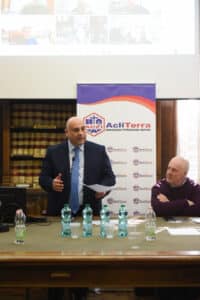
An ecological problem that requires an economic and supply chain response: this is the focus that emerged during the third edition of the international conference “Lionfish in the Mediterranean”, held in Munich from 13 to 15 October. The event, promoted by CISM and Elafonisos Eco, with the support of Acli Terra as a professional and social partner, brought together researchers, institutions, economic operators and civil society representatives from several Mediterranean countries to analyse the impact of the Lionfish invasion.
Acli Terra actively participated, emphasising the importance of valuing the work of productive communities.
Nicola Tavoletta, Acli Terra national president, commented on the association's intense activity:
“It is an intense period for Acli Terra, a continuous journey to meet people, the scientific community, farmers, breeders and fishermen. The goal is always the same: to give value to the work of people, at the centre of production and the economy. We must turn environmental challenges into opportunities for those who work the sea and the land.”
The approach to alien species management was also analysed from an economic and supply chain perspective.
Professor Attilio Celant, former Dean of the Faculty of Economics at La Sapienza University, highlighted the need for a strategic vision:
“The problem of alien species in the Mediterranean needs to be tackled in a broad perspective. It is essential to manage the entire supply chain and unite the small businesses that can trade these ‘goods’. Only in this way will we be able to create a virtuous mechanism that balances ecological and economic needs, supporting the work of our fishermen.”
The Munich conference was an important step in the dialogue initiated between marinas and institutions, combining scientific research with the practical need to transform emergency into resource.