There are days that, while being part of the chronicle of an apostolic journey, end up taking on a significance that goes beyond the simple dimension of the event and is placed on a deeper, almost symbolic level.
Pope Leo XIV's visit to the Principality of Monaco undoubtedly belongs to this category: not only for the historical and institutional importance of the Holy Father's presence, but also for the spiritual, ecclesial and civil content that it was able to express in the heart of a reality that is small in size, but central in symbolic intensity and identity density.
In this context of extraordinary depth, ACLI Terra took part in the Monaco day with a presence that cannot be read as a mere protocol adhesion to an appointment of great appeal, but as an integral part of a broader path, based on a vision that binds together territories, culture, spirituality, social responsibility and Mediterranean vocation.
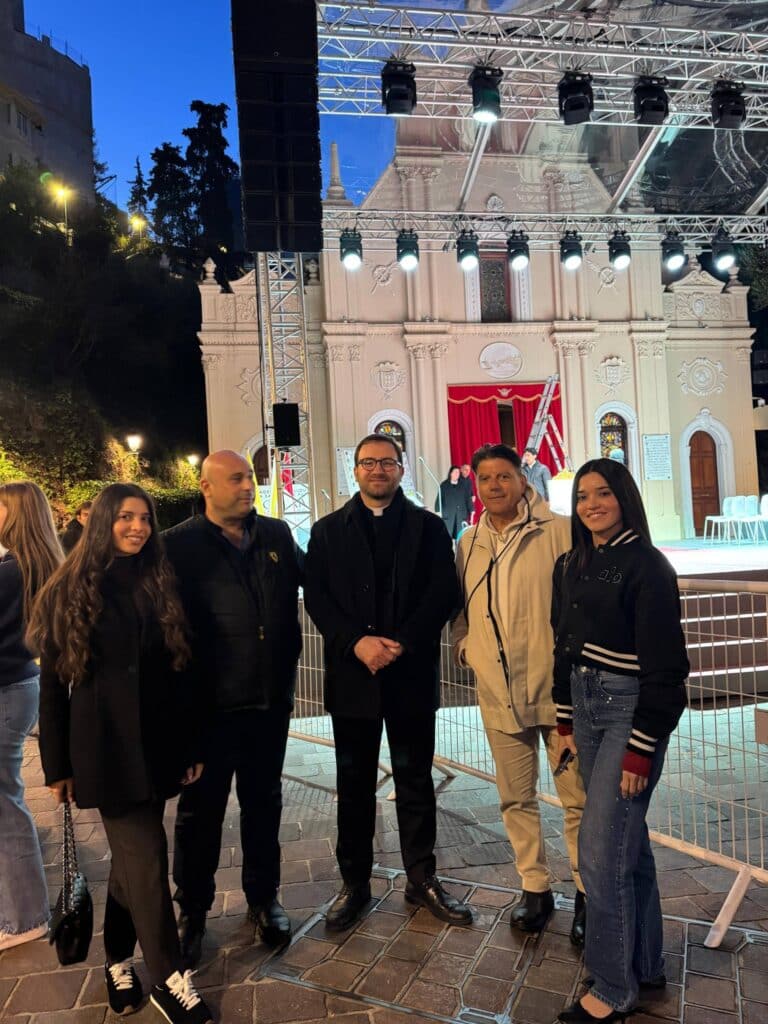
Representing Acli Terra in the Principality on this occasion were the National President Nicola Tavoletta and the National Coordinator of the Crops and Cultures Campaign Roberto Lai, who were present in a context that took on, from the early hours of the day, the value of a real milestone for the cultural and ideal path that Acli Terra is progressively consolidating.
Munich, on the day of the papal visit, appeared in all its singular nature as a place of border and synthesis: a small State, strongly rooted in its own Catholic tradition, projected into an international dimension and at the same time guardian of its own precise historical and religious identity. It is within this framework that the presence of ACLI Terra took on a particularly coherent, almost natural significance, standing at the point of intersection between ecclesial and cultural data, between the memory of places and the construction of new trajectories of dialogue.
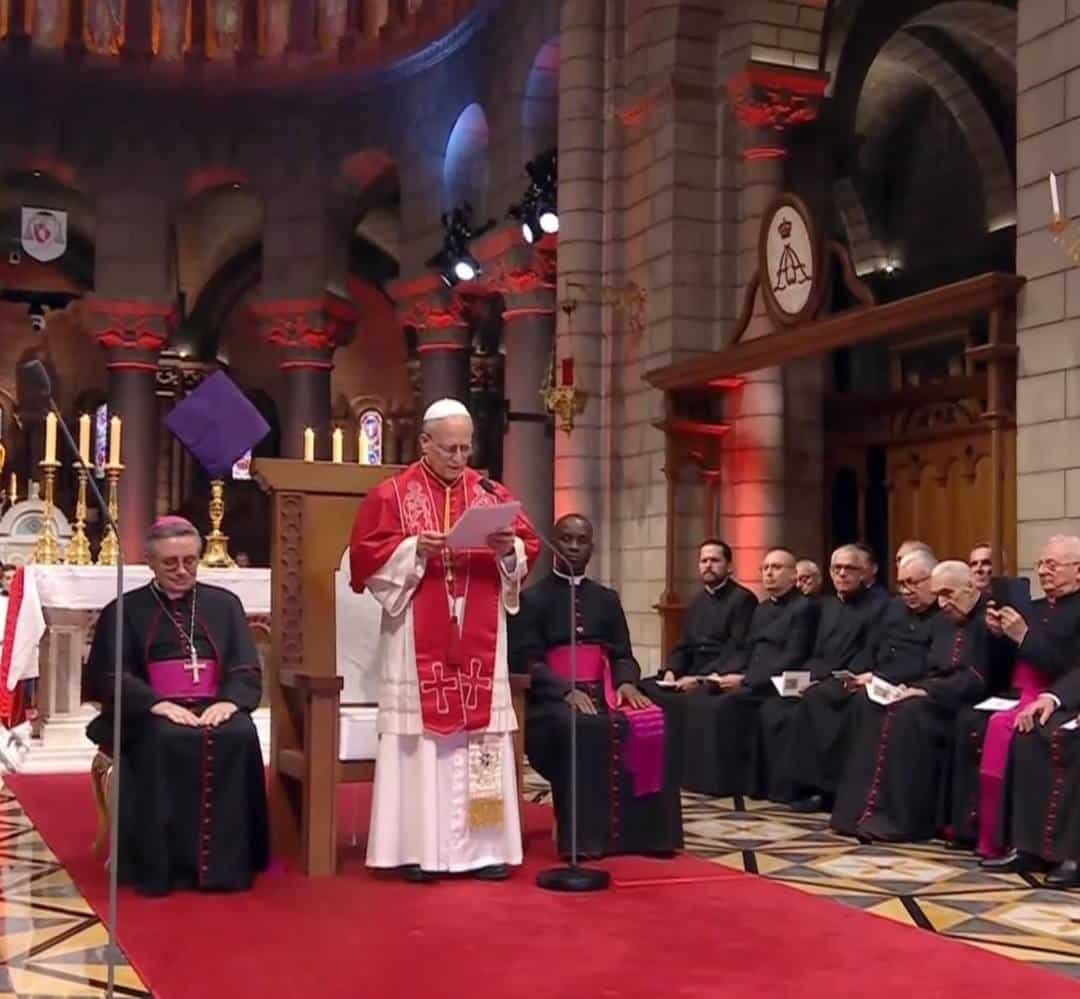
The Holy Father's arrival in the Principality, welcomed by the Monegasque authorities and the Princely Family, immediately gave the day the character of a visit destined to leave a mark. The passage to the Prince's Palace, the conversation with Albert II, the solemn overlook of the crowded square, the subsequent stop at the Cathedral, the direct contact with the population, the meeting with the clergy, with the religious, with young people and with catechumens: each moment of the visit gave back the figure of a pontificate that seems to have wanted to combine, from its very first steps, the strength of the symbol with the clarity of the message.
And it is in the message that the most relevant core of the day is captured.
Pope Leo XIV, in his first public speech in the Principality, pointed to Monaco as a possible laboratory of the Social Doctrine of the Church, clearly recalling themes that touch the very heart of the great contemporary issues: social justice, the balanced distribution of wealth, the custody of creation according to the principle of integral ecology, the defence of the dignity of the human person at every stage of life, the need to counter the processes of social and spiritual disintegration that turn prosperity into self-sufficiency and individualism into a cultural paradigm.
It was not, therefore, a merely celebratory speech.
Rather, it was a true indication of method and horizon: an invitation addressed to a reality that is apparently marginal on a geographical level, but potentially exemplary on an ethical and spiritual level, to recognise its own historical responsibility in the present time.
In this sense, the Holy Father's phrase that “it is the little ones who make history” took on a far wider significance than that of a mere pastoral suggestion. It resonated as a key to interpreting the Principality itself, but also as a possible key to interpreting the contemporary Mediterranean: a sea made up of shores that are close and at the same time distant, of peoples who look at each other, of shared memories and of fractures that are still open, of landings, of crossings, of identities that can still choose whether to close or find each other.
It is precisely on this terrain that ACLI Terra's presence in Munich is particularly pertinent.
Not as an ornamental presence, but as a presence consistent with a cultural trajectory that in recent months has taken on an increasingly defined physiognomy: that of a work capable of connecting the social dimension of culture, the memory of the territories, the Christian tradition of the Mediterranean and the construction of a new language, capable of speaking to the present without betraying the depth of its roots.
The Monegasque day, read in this perspective, confirmed that the Mediterranean continues to represent much more than geography.
It is a symbolic structure, a civilisation of shores, a system of spiritual, historical and cultural references that cannot be understood solely through the categories of emergency or geopolitics.
The Mediterranean is, first and foremost, a place of the soul: a space in which the great religious traditions, pilgrimages, routes of memory, the figures of saints, local cults and popular identities have over time built a deep, often silent, but still living web.
Within this horizon one can understand the particular symbolic force assumed, during the visit, by the reference to Saint Devote, patroness of the Principality, a young and luminous figure of the Monegasque Christian memory, recalled by the Holy Father not only as a devotional sign, but as a testimony capable of speaking to the new generations. The gesture of veneration of the relics and the subsequent meeting with young people and those preparing to enter the Church gave the visit a further depth: that of a Christianity that does not limit itself to the institutional representation of itself, but returns to questioning the transmission of faith, the value of witness, the relationship between roots and future.
It is at this precise point that ACLI Terra's presence is not episodic, but strategic.
Because the cultural work that the association is carrying out does not end with the valorisation of heritage or the celebration of the identity of territories, but tends more and more clearly towards a more ambitious goal: recognising culture as a form of civil and spiritual responsibility, a relational device, a possible bridge between communities, generations and Mediterranean shores.
Munich, in this sense, proved to be a particularly significant milestone.
Not only because of the intrinsic value of the papal visit, but because here a path of Mediterranean breadth seems to find further consistency, revolving around an intuition of great symbolic depth: that of the “Saints between land and sea”, understood not as a mere evocative formula, but as the key to accessing a broader interpretation of the relations between faith, landing, identity, cult, mobility and memory in the Christian Mediterranean.
At a time when the public lexicon too often tends to read the sea only as a border, crisis or fracture, the reference to saints linked to routes, landings, islands, coastal communities, and traditions of welcome and protection, instead restores a deeper dimension to the Mediterranean: that of a space traversed by the history of faith, the circulation of devotions, the construction of common memberships, and the capacity of religious symbols to generate community.
Pope Leo's visit to Munich offered valuable confirmation in this respect.
It showed that even a small principality can become, if read with intelligence and depth, a privileged vantage point on the relationship between Catholicism, identity, social responsibility and the Mediterranean vocation.
It showed that faith, when it is not reduced to rituals without depth, is still capable of speaking to history.
It showed that places are never neutral, and that there are days when they are charged with an evocative power that calls for further responsibility.
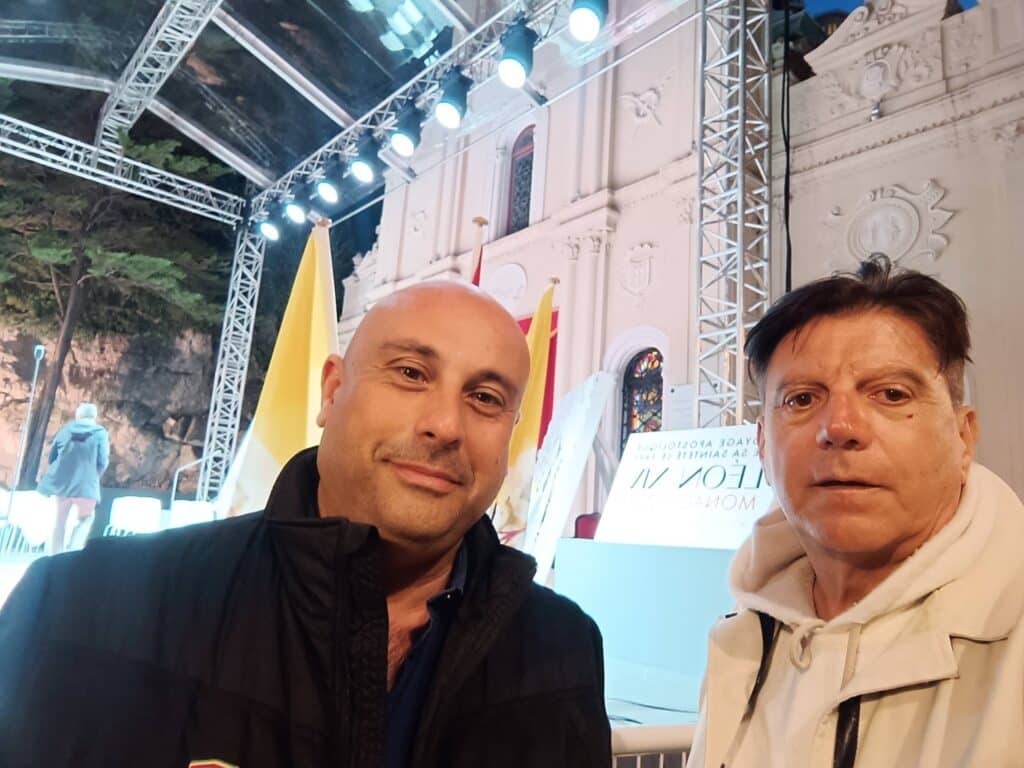
For ACLI Terra, being present in Munich on a day of such magnitude therefore means confirming a precise choice of field:
To be there where culture meets spirituality, where memory can become a project, where roots can become a contemporary language, where the Mediterranean can once again be thought of not as a restless periphery, but as the symbolic centre of a civilisation of dialogue.
This is not an occasional presence.
It is a presence that is part of a journey, and it is precisely in contexts like this that it acquires meaning, coherence and perspective.
Munich, then, is not just a stop on the calendar of a papal visit.
It represents a signal.
A place where institution, faith, memory, territory and vision intersected in an almost exemplary manner.
A place where the Mediterranean has re-emerged in its highest form: not only as a physical sea, but as a cultural and spiritual horizon, as a space of possible fraternity, as a weave of symbols still capable of speaking to the present.
And perhaps this is the most important delivery that the Monaco day leaves to those working in the field of culture and social responsibility:
that there is no authentic future without memory,
that there is no true identity without openness,
and that there is no Mediterranean worthy of the name except as a place of encounter, civilisation and hope
Roberto Lai