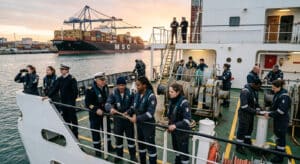
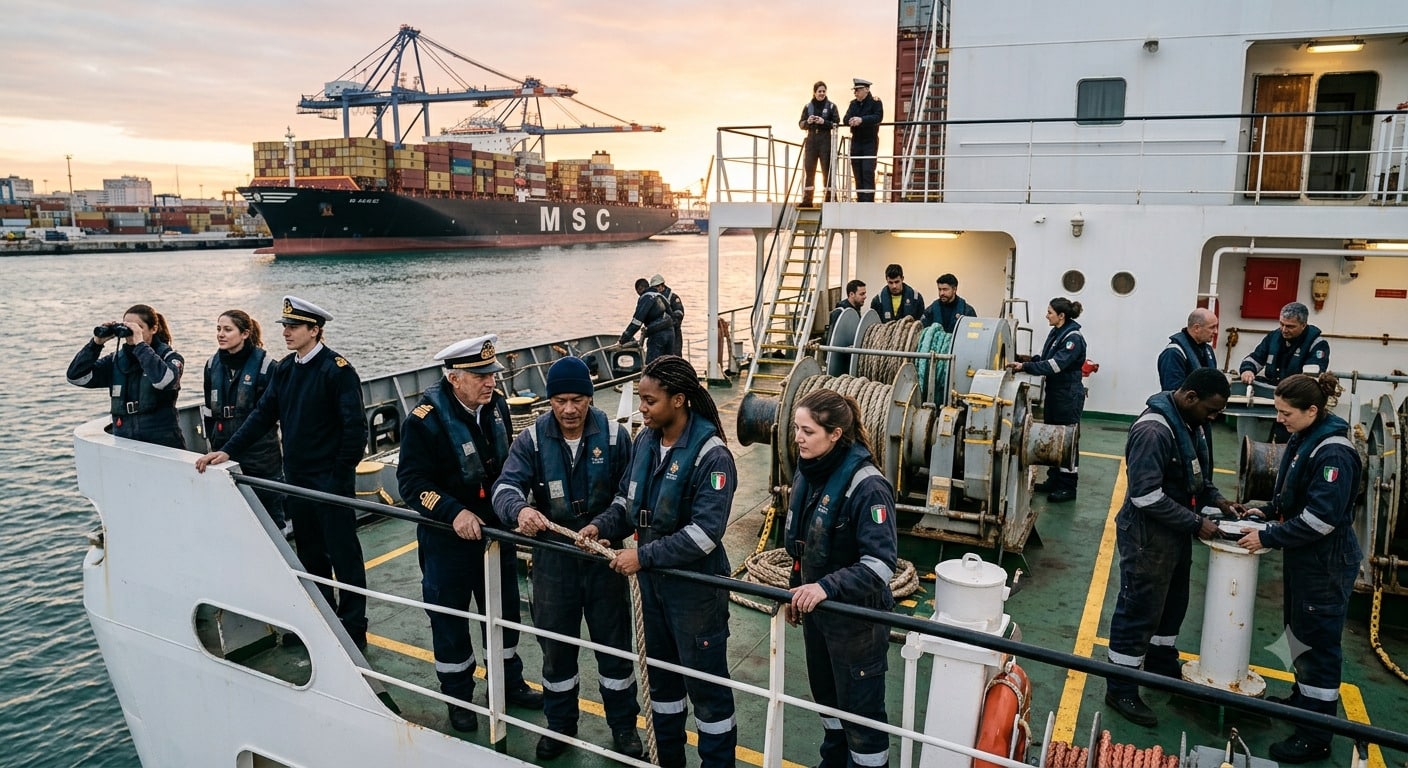
There is a silent humanity that keeps the planet's economy going, moving along the blue arteries of the globe: seas, rivers, and lakes. Yet, the perception of their sacrifice only emerges when the gears grind to a halt. On the occasion of Sunday of the Sea 2026, The Church and trade associations are once again shining a spotlight on the lives of millions of seafarers, fishermen and port workers, who are now more than ever caught between technological efficiency and social isolation, exacerbated by recent international geopolitical tensions.
The Vatican: “Let them not be cogs or commodities”
This year's focus is closely linked to current events. The crisis in the Strait of Hormuz has clearly shown the vulnerability of global supply chains, but above all, the human tragedy of seafarers. Many crews have found themselves trapped on board due to armed conflicts, facing food shortages and constant terror for their lives.
The Cardinal Michael Czerny, Prefect of the Dicastery for Promoting Integral Human Development, issued a stern warning, referencing the first encyclical of Pope Leo XIV, Magnificent Humanity:
“Technological and economic systems must never reduce the human person to data, a cog, or a commodity. A ship must never become a modern Babel where people live side-by-side but remain unseen and unheard.”
The paradox of modernity hits hard: in the era of maximum digital connection, seafarers are experiencing unprecedented loneliness. Crews reduced to a minimum, exhausting shifts, and shore leave cut to the barest of bones eradicate human contact. For over a century, the network of Stella Maris (Apostleship of the Sea), whose port chaplaincies offer welcome, psychological and spiritual support in ports around the world, without distinction of nationality or faith.
The Pope's appeal at the Angelus
Also Pope Leo XIV He wanted to dedicate a deep thought to these workers during the Sunday Angelus:
“My thoughts go out to all the seafarers, fishermen, and port workers of the world who, marked by separation from their loved ones and sometimes by fear of the conflicts that cross the sea lanes, sustain the trade and life of many peoples with patient and silent work.”
Not just narration: the demand for tailor-made welfare
From words of ecclesial inspiration, we move to concrete requests from civil and associative society. Nicola Tavoletta, national president of Acli Terra, emphasised the need for structural reforms in the sector, especially for the fishing and coastal segment:
“The sea workers are rightly defined as ‘environmental guardians’, but we cannot live on narratives alone. They must be protected with tailored welfare, given the complexity of jobs carried out in difficult environments. We must redesign adequate protections for generational continuity, for the family, and for training related to technological development.”
Care for creation and human dignity: a single destiny
The appeal of Sea Sunday 2026 inextricably links the human and ecological factors. Seas, today scarred by pollution, wild exploitation and climate change, are not mere commercial highways, but fragile ecosystems upon which the survival of entire coastal communities depends.
“When the oceans suffer, all of humanity suffers”, Cardinal Czerny reminds us. Protecting the sea and protecting those who work on it are therefore not two conflicting priorities, but rather two sides of the same moral commitment. The Church’s wish, coupled with gratitude towards seafarers and volunteers, is that this day may be transformed into concrete actions of solidarity and global policies capable of putting people – and not just profit – back at the centre of trade routes.